
Wisdom Tooth Extraction Recovery NZ: Your 2026 Guide to Healing Fast
Did you know that roughly 65% of Kiwis between the ages of 18 and 25 will need at least one wisdom tooth removed? While the surgery itself is a standard milestone, it's completely natural to feel a bit apprehensive about the wisdom tooth extraction recovery nz process. You might be worried about the sharp sting of dry socket, how long you'll need to stay away from work or uni, or how to manage the costs of professional dental care in 2026.
We understand these anxieties and believe that your path to a healthy smile should be as gentle and transparent as possible. This guide is designed to empower you with expert, local advice so you can master your healing journey with confidence. We'll explore effective pain management strategies, provide clear instructions on what to eat to speed up your recovery, and explain how to access financial support through WINZ grants. By the time you finish reading, you'll have a clear, step-by-step plan for a comfortable and stress-free return to your daily routine.
Key Takeaways
-
Learn why protecting the blood clot is the "golden rule" of wisdom tooth extraction recovery nz and how to manage bleeding during those critical first 24 hours.
-
Discover how to effectively minimise puffiness using the 20-minute cold therapy method and why you should expect swelling to peak around the third day.
-
Master the transition from liquids to "fork-mashable" meals while learning which common drinks you must avoid to keep the extraction site safe.
-
Identify the specific "Red Flag" symptoms of dry socket so you know exactly when to contact your dentist for an urgent, professional assessment.
-
Understand how to navigate dental costs in New Zealand and access free WINZ quotes to ensure your essential care remains affordable and accessible.
Table of Contents
The First 24 Hours: Protecting the Blood Clot for Safe Healing
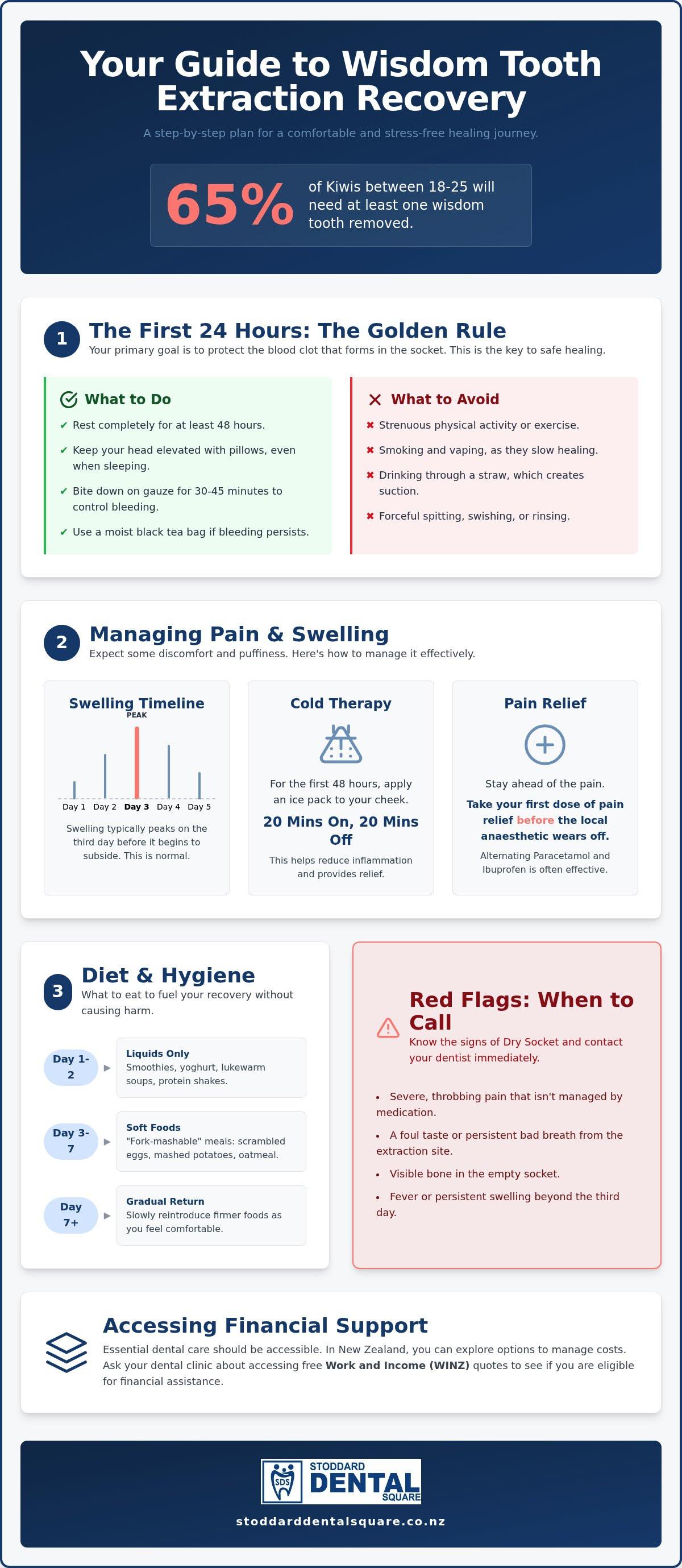
The first 24 hours are the most critical phase of your wisdom tooth extraction recovery nz. Your primary goal is to protect the blood clot that forms in the socket. This clot acts as a natural biological bandage, sealing the area to protect the underlying bone and nerves while new tissue begins to grow. If this clot is dislodged, you risk developing a painful condition called dry socket. Understanding what impacted wisdom teeth are helps illustrate why this protection is so vital; these teeth are often deeply embedded, meaning the extraction site requires a stable environment to heal properly.
Rest is your best medicine right now. You might feel okay as the local anaesthetic wears off, but this isn't the time to hit the gym or head out with friends. High blood pressure from physical activity can easily dislodge that fragile clot. We recommend taking at least 48 hours off from work or uni to give your body the best start. You should also avoid using straws, spitting forcefully, or smoking. These actions create suction in your mouth that can literally pull the clot right out of its socket. Smoking is particularly risky, as the chemicals interfere with blood flow and significantly slow down your wisdom tooth extraction recovery nz.
Immediate Bleeding Control and Gauze Use
When you leave our clinic, we'll place a firm pad of gauze over the site. Keep this in place for at least 30 to 45 minutes, biting down with steady, consistent pressure. It's normal to see some pinkish oozing for the first day; this is just blood mixing with saliva. If bleeding persists, try the "tea bag trick". Moisten a standard black tea bag, wrap it in a small piece of gauze, and bite down for another 30 minutes. The tannic acid in the tea helps blood vessels constrict and encourages a firm clot to form.
Setting Up Your Recovery Space at Home
Before you arrive at our Mt Roskill clinic, set up a comfortable "recovery nest". Keep several pillows on hand to ensure your head stays elevated, even while you sleep. This simple adjustment reduces blood pressure in your jaw, which helps minimise throbbing and prevents excessive swelling. Your recovery kit should include soft foods, prescribed pain relief, and ice packs ready in the freezer. By organising your schedule for total rest, you allow your body to focus entirely on the delicate process of healing.
Managing Pain and Swelling: The Kiwi Patient’s Toolkit
The surgery is over, and now the focus shifts to your comfort. While the most intensive part is behind you, the next few days are when the real work of wisdom tooth extraction recovery nz takes place. It is a common surprise for many patients that swelling doesn't peak immediately. In most cases, day 3 is when you will notice the most significant puffiness. Understanding the typical timeline of wisdom teeth removal recovery helps you stay calm when you see that peak "chipmunk" look in the mirror; it is simply your body's natural inflammatory response doing its job.
Cold therapy is your most reliable ally during the first 48 hours. We recommend using an ice pack or even a bag of frozen peas wrapped in a clean, thin towel. Apply this to the outside of your jaw using a "20-minutes-on, 20-minutes-off" cycle. This method effectively constricts blood vessels and limits fluid buildup in the facial tissues. It's a simple, non-invasive way to keep the initial inflammation under control before it becomes uncomfortable.
When it comes to medication, timing is everything. Most Kiwi dental professionals suggest using standard pharmacy options like Panadol (paracetamol) and Nurofen (ibuprofen). The golden rule is to take your first dose before the local anaesthetic wears off completely. Don't wait for the pain to arrive. It is much easier to maintain a state of comfort than it is to chase the pain once it has already set in. If you have any specific concerns about your medication plan, our team at Stoddard Dental Square can provide personalised advice during your consultation.
Effective Pain Relief Strategies
Alternating your medications is often the most effective way to manage post-operative sensitivity. By staggering doses of paracetamol and ibuprofen every few hours, you ensure a consistent level of relief remains in your system throughout the day. This proactive approach is far more successful than a "wait and see" strategy. Prescribed antibiotics play a vital role in preventing secondary infections that could otherwise disrupt your body's natural healing process.
Reducing Facial Swelling and Bruising
After the initial 48-hour window, you should transition from cold packs to gentle warmth. A warm compress or a wheat pack helps increase blood circulation to the area, which assists your body in clearing away any bruising or residual swelling. You might also experience "trismus," which is a temporary stiffness of the jaw muscles. You can gently encourage mobility by performing very light jaw opening and closing exercises once the initial soreness begins to fade. This helps restore your full range of motion more quickly and comfortably.
Diet and Hygiene: Keeping the Extraction Site Clean
Nourishing your body is a fundamental part of your wisdom tooth extraction recovery nz journey. While your appetite might be low initially, staying hydrated and well-fed provides the essential building blocks for tissue repair. We recommend a gradual transition from clear liquids to what we call "fork-mashable" meals over the first few days. This approach ensures you receive adequate nutrition without putting undue stress on the surgical sites or risking the integrity of the healing clots.
Hydration is equally vital. Water should be your primary choice, but it is important to avoid "fizzy" drinks, including sparkling water and soft drinks. The carbonation and acidity can irritate the sensitive tissue and potentially disrupt the healing process. While it might be tempting to reach for a cold straw, remember that the suction can dislodge your blood clot. Always sip directly from a glass or use a spoon for thicker liquids during this early stage.
Cleanliness is the best defence against post-operative complications. Starting 24 hours after your surgery, you should begin gentle saltwater rinses. This simple habit helps clear away food debris and reduces the bacterial load in your mouth without the need for aggressive scrubbing. It is a soothing, natural way to maintain a healthy environment for your gums to knit back together.
What to Eat (and What to Skip)
Kiwi patients have plenty of delicious, soft options to choose from. Mashed kumara is an excellent, nutrient-dense choice that is easy on the jaw. You can also enjoy smooth yoghurt, scrambled eggs, or well-blended smoothies. To ensure you are getting enough protein for tissue repair, consider adding unflavoured protein powder to your soups or mashes. Avoid the "Danger Zone" foods such as poppy seeds, nuts, and crusty bread; these small, hard particles can easily become trapped in the extraction socket, leading to irritation or infection.
Safe Cleaning Techniques
To keep the area clean safely, mix half a teaspoon of salt into a cup of warm water. Instead of vigorous swishing, take a sip and gently tilt your head from side to side, allowing the liquid to "bathe" the wound. Lean over the sink and let the water fall out naturally rather than spitting. When brushing your other teeth, continue your normal routine to keep the rest of your smile healthy, but use a very soft touch as you approach the back of your mouth. Avoiding the surgical site for the first few days with your toothbrush is perfectly fine as long as you are consistent with your gentle saltwater rinses.
When to Seek Help: Identifying Dry Socket and Other Issues
Most patients find that their wisdom tooth extraction recovery nz follows a predictable path of daily improvement. However, being able to distinguish between typical post-operative discomfort and a genuine complication is essential for your peace of mind. While some degree of soreness is expected, pain that suddenly intensifies several days after your procedure is a clear signal that your body needs professional attention. Normal healing pain should gradually subside, whereas complications like dry socket often announce themselves with a sharp, throbbing return of symptoms just as you thought you were over the worst of it.
Dry socket, or alveolar osteitis, is the most frequent complication, occurring when the protective blood clot we discussed earlier either fails to form or is prematurely dislodged. This leaves the underlying bone and sensitive nerve endings exposed to air, food, and fluids. Beyond the physical discomfort, you might notice a persistent foul taste or bad breath that doesn't improve with gentle saltwater rinses. These symptoms often indicate that the healing process has stalled. It is a common misconception that you should just "tough it out," but a secondary infection or dry socket won't resolve on its own without professional care.
Contact us for an emergency dental assessment
The Dry Socket Checklist
If you suspect something is wrong, look for these specific indicators. A healthy socket should contain a dark blood clot; a dry socket often has a tell-tale "empty" appearance where you can see the whitish bone underneath. The pain associated with this condition is unique because it often radiates away from the site, travelling toward your ear, eye, or temple on the same side of your face. At Stoddard Dental Square, we treat dry socket by carefully cleaning the area and applying a medicated dressing that provides almost immediate relief and protects the site while it restarts the healing process.
True Dental Emergencies After Surgery
While dry socket is painful, other symptoms require even more urgent care. Watch for signs of an allergic reaction to new medications, such as a rash, hives, or unexpected swelling of the lips and tongue. A persistent high fever or increasing difficulty swallowing are also significant "Red Flags" that should not be ignored. Because we are open 7 days a week in Mt Roskill, you don't have to wait through a long weekend if you have concerns about your wisdom tooth extraction recovery nz. We are here to ensure your healing remains safe and supported every day of the week.
Accessing Support: WINZ Quotes and Care in Auckland
Financial concerns shouldn't stand in the way of your health. In New Zealand, the cost of wisdom tooth removal can vary significantly depending on whether the tooth is simple to remove or requires a more complex surgical approach. With over half of adult New Zealanders reporting that they avoid visiting the dentist due to cost, we believe it is vital to provide clear pathways for financial support. A successful wisdom tooth extraction recovery nz starts with removing the stress of how you'll pay for your care.
Stoddard Dental Square is a WINZ-approved clinic, meaning we're authorised to provide the formal documentation required by Work and Income New Zealand. We offer free WINZ quotes to help you access the essential treatment you need without an upfront financial burden. By choosing a clinic that understands the WINZ system, you ensure that your paperwork is handled correctly the first time. This allows you to focus entirely on your physical healing rather than administrative hurdles.
Financial Assistance for Your Extraction
Eligible low-income New Zealanders can currently access a non-repayable dental grant of up to $1,000 within a 52-week period for immediate and essential dental treatment. This grant is means-tested and specifically designed for urgent needs like wisdom tooth removal. To apply, you first need to book a consultation with our team. We will assess your situation and provide a detailed, professional quote that you can take to your WINZ appointment or upload through MyMSD. Learn more about our WINZ support services to see how we can assist you in navigating these requirements.
Why Auckland Patients Choose Stoddard Dental Square
Our clinic is designed to be a supportive hub for the Mt Roskill community. We understand that dental surgery can be intimidating, so we prioritise a gentle, compassionate approach that puts even the most anxious patients at ease. One of the greatest benefits of choosing our team is our 7-day availability. If you have a question about your wisdom tooth extraction recovery nz on a Sunday afternoon, you don't have to wait for Monday morning to get an answer. You can find us conveniently located in Mt Roskill, where our modern facilities and friendly team are ready to guide you through every step of your journey toward a pain-free smile.
Take Charge of Your Healing Journey
Navigating your wisdom tooth extraction recovery nz doesn't have to be a source of stress. By prioritising rest during the first 24 hours, maintaining a gentle hygiene routine, and staying ahead of discomfort with a structured medication schedule, you can significantly speed up your return to normal life. Your recovery is a partnership between our professional expertise and your dedicated self-care at home.
As a WINZ-approved dentist open 7 days a week, we are here to support you through every stage of this process. Whether you need expert emergency care in Mt Roskill for a sudden concern or help securing financial assistance, our team remains committed to your comfort and peace of mind. We believe that high-quality dental care should be accessible to everyone in our community, regardless of their budget or schedule.
Book your consultation and get a free WINZ quote today
You've already taken the first step by educating yourself on the best ways to heal. We look forward to helping you achieve a healthy, pain-free smile with the personalised and compassionate care you deserve.
Frequently Asked Questions
How long does the pain last after a wisdom tooth extraction?
Most patients find that the most intense discomfort subsides within three to seven days. While you will likely feel quite tender for the first 72 hours, this is also when swelling typically peaks. By the end of the first week, your jaw should feel significantly more comfortable. If you notice pain suddenly worsening during your wisdom tooth extraction recovery nz, it is a good idea to contact us for a check-up.
Can I get a WINZ grant for wisdom teeth removal in Auckland?
Yes, eligible low-income New Zealanders can apply for a non-repayable grant of up to $1,000 for essential dental care. As a WINZ approved dentist, we provide the free quotes required for your application. This support is means-tested and designed for urgent treatments like wisdom tooth removal. We recommend booking a consultation so we can assess your needs and provide the necessary paperwork for Work and Income.
What are the first signs of dry socket?
The first sign of dry socket is usually a sharp, throbbing pain that starts three to five days after surgery. This discomfort often radiates toward your ear or eye and isn't easily managed with standard pharmacy medication. You might also notice an "empty" look in the socket where the dark blood clot should be. A persistent foul taste or bad breath are also common indicators that the clot has dislodged.
When can I start eating solid food again?
You can typically reintroduce solid foods about seven days after your procedure, provided your jaw feels comfortable enough to chew. It is best to start with soft, "fork-mashable" items before moving back to your regular diet. Avoid crunchy, sharp, or seedy foods like crackers or popcorn for at least two weeks. These can easily get trapped in the healing site and cause irritation or slow down your wisdom tooth extraction recovery nz.
Is it normal to have a hole in my gum after the tooth is gone?
It is completely normal to have a visible indentation or "hole" in your gum where the tooth was removed. This is simply the empty socket where the roots used to sit. Your body will gradually fill this space with new bone and tissue from the bottom up over the next few months. While the gum tissue usually closes over the area within a few weeks, the deep healing underneath takes a little longer.
What should I do if my extraction site starts bleeding again at night?
If you experience fresh bleeding at night, place a clean pad of gauze or a moistened black tea bag over the site. Bite down firmly and consistently for 30 minutes without stopping to check. The tannic acid in the tea bag helps constrict blood vessels and encourages clotting. If the bleeding is heavy and doesn't stop after two attempts, contact our emergency dental care team immediately for advice.
Can I drive myself home after the procedure?
Whether you can drive depends entirely on the type of sedation used during your surgery. If you only had a local anaesthetic, you might feel capable of driving, but we still recommend having a friend or family member collect you. You may feel fatigued or lightheaded once the initial adrenaline wears off. If any form of oral or IV sedation was administered, you must not drive for at least 24 hours.
How do I clean my mouth if I can’t open my jaw fully?
If your jaw feels stiff, focus on gentle saltwater rinses to keep the area clean without needing to open wide. Mix half a teaspoon of salt in warm water and let it soak over the site by tilting your head. Don't swish vigorously. You can use a child-sized toothbrush with very soft bristles to clean your front teeth, as the smaller head is easier to navigate when your range of motion is limited.