
Root Canal Aftercare: A Compassionate Guide to a Smooth Recovery
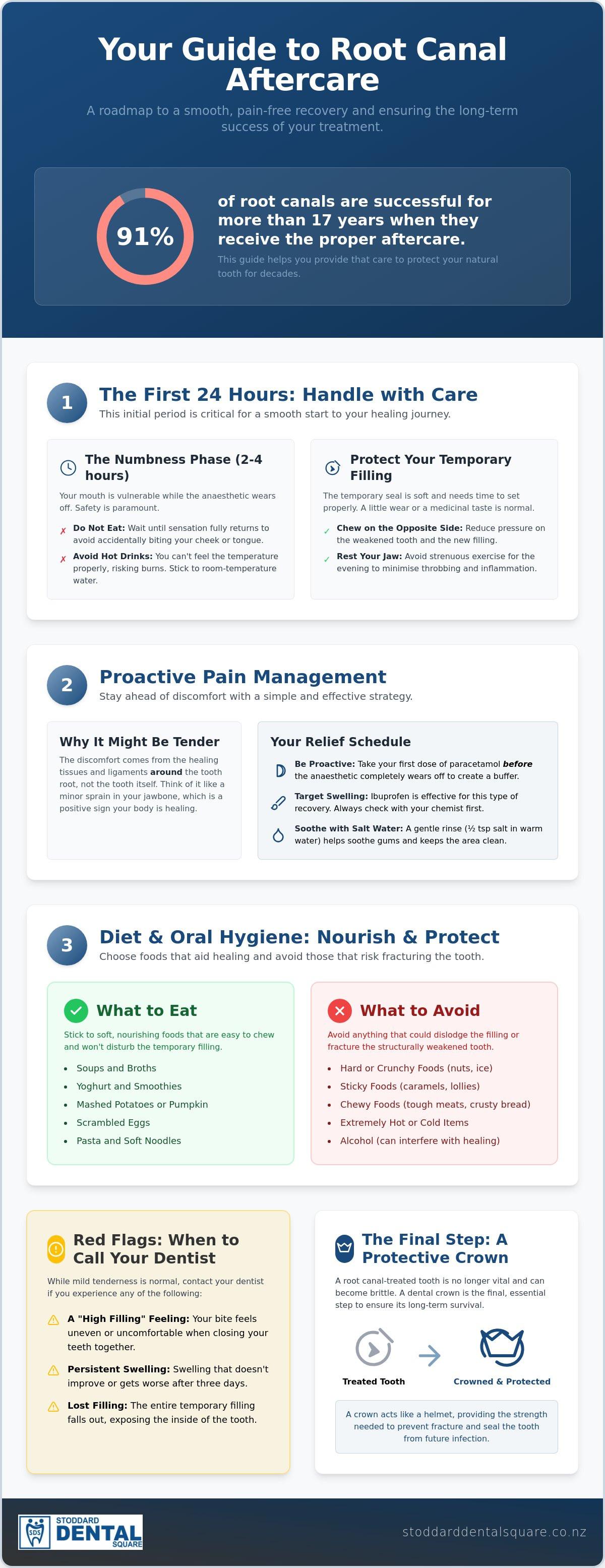
Did you know that roughly 91% of root canals remain successful for more than 17 years when they receive the right attention? According to a July 2026 study in the Journal of Endodontics, the vast majority of these treatments allow patients to keep their natural teeth for decades. While the procedure itself is a major step toward saving your smile, the secret to a lifetime of comfort actually lies in your root canal aftercare. It's completely normal to feel a sense of relief mixed with a little trepidation as you leave the dental clinic. You might be wondering how to handle the first few hours at home or what to do if that temporary filling feels a bit strange under your tongue.
We understand that the recovery phase can feel a bit uncertain, but you don't have to navigate it alone. You deserve a healing process that is as smooth and stress-free as possible. This guide provides expert advice to help you achieve a pain-free recovery and absolute confidence in your treatment's long-term success. We will walk you through effective pain management strategies, clear up any confusion regarding your diet, and explain the vital role a permanent crown plays in protecting your tooth. By the end, you'll know exactly how to support your healing and when it's time to give your dentist a quick buzz for peace of mind.
Key Takeaways
-
Safeguard your recovery in the first few hours by waiting for the anaesthetic to wear off before eating to avoid accidental cheek or tongue injuries.
-
Master your root canal aftercare with a proactive pain management strategy that effectively handles tenderness using common chemist-bought options.
-
Protect the temporary filling and the weakened tooth by choosing soft, nourishing foods while avoiding hard or sticky snacks that could cause a fracture.
-
Gain the confidence to identify red flags, such as a "high filling" feeling or persistent swelling, so you know exactly when to contact your dentist.
-
Ensure the long-term survival of your tooth by completing the final step of the journey: a custom-fitted dental crown to provide essential strength and protection.
Table of Contents
Immediate Aftercare: Navigating the First 24 Hours
The hard part is behind you. You have successfully completed your root canal treatment, and now your body needs a little space to begin the healing process. While you might feel ready to jump back into your daily routine, the first 24 hours are the most critical for ensuring your long-term comfort. Effective root canal aftercare starts the very moment you step out of the dental chair, focusing primarily on safety while your mouth is still waking up.
The Numbness Phase: Safety First
Local anaesthetic is a wonderful tool for comfort, but it leaves your mouth vulnerable for two to four hours after your appointment. During this window, your "Golden Rule" is simple: don't eat anything until the sensation has fully returned to your lips and tongue. It's incredibly easy to accidentally bite your cheek or tongue without realising it, which can lead to painful swelling or a nasty "cheek-bite" injury. Similarly, avoid that hot cup of tea or coffee. Because you can't feel the temperature properly, you risk significant burns to the roof of your mouth or your throat. Stick to room-temperature water if you're thirsty during this period.
Caring for Your Temporary Filling
Your dentist has likely placed a temporary filling or a sedative dressing to seal the tooth until your final restoration. These materials are designed to be slightly softer than permanent fillings by design, meaning they need time to set properly. It's quite common to feel a tiny layer of the filling wear away or notice a slightly medicinal taste in your mouth. Don't panic; this is a normal part of the process and isn't usually an emergency. To protect the site, try to chew exclusively on the opposite side of your mouth for the remainder of the day. This reduces the pressure on the weakened tooth and keeps the temporary seal intact while it hardens.
Beyond just watching what you eat, remember that your jaw has been open for a while and deserves a rest. Your root canal aftercare should include a bit of quiet time. Avoid strenuous exercise or heavy lifting for the first evening, as keeping your heart rate steady can help minimise any throbbing or initial inflammation. Think of this first day as a gentle transition toward a healthier, pain-free smile. Resting your jaw is just as important as resting your body, so keep your conversations light and your meals soft.
Proactive Pain Relief and Managing Discomfort
It might seem strange that a tooth without a nerve can still cause a bit of a stir. You've just had the internal tissue removed, yet there is often a lingering sensation when you bite down or touch the area with your tongue. This is a very common part of root canal aftercare. The discomfort doesn't actually come from the inside of the tooth anymore; it comes from the sensitive neighbourhood surrounding it.
The Science of Post-Op Tenderness
While the internal nerve is gone, the ligaments and tissues that anchor your tooth to the jawbone are still very much alive and recovering from the procedure. Periapical inflammation is the primary cause of post-procedure pressure, occurring as your body sends healing cells to the area around the root tip. Think of it like a minor sprain. Just as an ankle feels tender after a twist, your tooth socket needs a few days to settle down. This mild ache is actually a positive sign that your immune system is busy repairing the site and ensuring the infection stays away.
Beyond the tooth itself, your jaw muscles might feel a little weary. Keeping your mouth open for an extended period can lead to temporary muscle soreness, similar to the feeling after a long workout at the gym. A gentle salt-water rinse, using about half a teaspoon of salt in a cup of warm water, can work wonders here. It helps soothe the gums around the treatment site and keeps the area clean without the need for vigorous brushing in those first 24 hours. It's a simple, old-school remedy that remains one of the most effective ways to reduce local inflammation.
Your Pain Management Schedule
To stay ahead of any discomfort, the best strategy is to be proactive rather than reactive. We suggest taking your first dose of paracetamol before the anaesthetic completely wears off. This creates a helpful "buffer" so you aren't playing catch-up once the numbness fades. Ibuprofen is particularly effective for this type of recovery because it specifically targets the swelling around the root tip, though you should always check with your chemist to ensure it's suitable for your specific health needs.
Most patients find that following the post-treatment care instructions provided by their dental team keeps discomfort well within a manageable range. If you find that over-the-counter options aren't quite doing the trick, or if the pain seems to be increasing after the third day, don't hesitate to reach out. Our team at Stoddard Dental Square is always here to provide guidance or a quick check-up to ensure your healing is on the right track. Staying comfortable is a team effort, and we're committed to making your recovery as smooth as possible.
Diet and Oral Hygiene: The Recovery Roadmap
Maintaining a healthy environment in your mouth is just as important as the procedure itself. Proper diet and hygiene ensure the area remains free from irritation while the tooth is at its most vulnerable. The first few days following your procedure are about balance. You want to nourish your body and keep your mouth clean without putting undue stress on the treated tooth. Mastering your root canal aftercare means adjusting your daily habits to protect the temporary filling and prevent any accidental fractures while the tooth is in its weakened state.
The "Soft Food" Shopping List
Think of your pantry as your best friend during this phase of healing. We recommend reaching for local staples that are easy on the jaw and require minimal chewing. Mashed kumara, warm pumpkin soup, and fluffy scrambled eggs are excellent choices that provide plenty of nutrition. Smoothies are also a fantastic way to keep your energy up, provided you skip the crunchy seeds or nuts. It is vital to avoid "crunchy" or "sticky" items like muesli bars, lollies, and crusty bread. These can easily dislodge a temporary filling or, worse, cause a crack in the tooth structure. Stick to lukewarm temperatures for your meals. Even though the internal nerve is gone, the surrounding gums can still be sensitive to extreme heat or cold as part of the Root Canal: Procedure & Recovery process.
Gentle Oral Hygiene Habits
Keeping your mouth bacteria-free is essential for preventing infection, so don't stop your routine entirely. You should continue to brush and floss your other teeth as normal to maintain overall oral health. However, the treated tooth requires a slightly different touch. Use a soft-bristled toothbrush and apply a very gentle circular motion to the area. If you usually use an electric toothbrush, you might find it more comfortable to switch to a manual one for the treated site for the first few days to avoid excess vibration.
When you floss around the treated tooth, there is a specific technique to remember. Instead of snapping the floss back up through the contact point, gently slide it out through the side. This simple change prevents the floss from catching the edge of your temporary filling and accidentally pulling it out. By being meticulous with these small details, you create the perfect environment for a smooth and successful recovery. If you ever feel unsure about your technique, you can always check our latest updates on the Stoddard Dental Square Facebook page for more practical tips on keeping your smile healthy.
Identifying Red Flags: When to Call Your Dentist
Most people find their recovery is quite predictable, but knowing how to spot the difference between typical healing and a complication is a vital part of effective root canal aftercare. While we expect the area to feel a bit "bruised" for a few days, certain symptoms act as a signal that your body needs a helping hand. Recognising these red flags early allows us to step in and ensure your recovery remains on the right track without unnecessary stress or discomfort.
Signs of a Post-Treatment Flare-Up
A "flare-up" is a rare but intense reaction where the immune system responds vigorously to microscopic bacteria or changes in the root canal space. Unlike the dull ache we discussed earlier, a flare-up usually involves visible facial swelling or a fever. If you notice that your pain is actually getting worse after the third day rather than gradually fading away, it's time to give us a buzz. This isn't a sign that the treatment has failed, but it does mean we might need to adjust your medication or provide additional cleaning to settle the area.
Another common reason for post-op pain is the "high filling" problem. If your tooth feels "too tall" or is the first thing to touch when you close your jaw, your bite is likely slightly off. Because the ligaments around the tooth are already sensitive, this extra pressure can cause sharp, stabbing pain every time you eat. A quick, two-minute adjustment at the clinic can often provide almost instant relief by redistributing the force of your bite correctly and allowing the inflammation to subside.
Accessing Weekend Care
We know that dental issues don't always wait for a Monday morning. For many Aucklanders, a weekend flare-up can feel like a major hurdle. This is exactly why Stoddard Dental Square is open 7 days a week. We believe that professional support should be accessible when you actually need it, not just when it's convenient for the clock. There's no need to spend your Sunday in distress; our team is ready to provide the care and reassurance you deserve in a warm, welcoming environment.
Whether you need a minor bite adjustment or have concerns about new swelling, we are here to support your journey toward a healthy smile. We invite you to follow us on Facebook for regular clinic updates and practical oral health tips. If you're worried about your symptoms or need urgent assistance, don't hesitate to contact us for emergency dental care. Your comfort is our priority, and we're committed to being your partner in successful root canal aftercare.
The Final Step: Protecting Your Investment with a Crown
Completing the internal cleaning of a tooth is a significant milestone, but the journey of root canal aftercare isn't quite finished until the tooth is properly reinforced. While you may feel a sense of relief once the initial discomfort subsides, the tooth remains in a vulnerable state. Think of the root canal procedure as saving the foundation of a house; the dental crown is the roof that protects everything inside from the elements. Without this final restoration, even the most technically perfect root canal is at risk of failure.
Why a Dental Crown is Non-Negotiable
When the internal pulp and nerve are removed, the tooth no longer receives a direct blood supply. Over time, this causes the tooth structure to become brittle, much like a dry branch on a tree that can easily snap under pressure. Because your molars and premolars endure incredible force every time you chew, a root-filled tooth without a crown is highly susceptible to vertical fractures. If the tooth splits below the gum line, it often cannot be saved and may require extraction.
A dental crown acts as a protective helmet, encasing the entire visible portion of the tooth. This seal is vital for preventing future reinfections. Temporary fillings are designed for short-term use and can eventually leak, allowing bacteria to seep back into the newly cleaned canals. Research consistently shows that delaying the placement of a permanent crown is the primary reason why root canals eventually fail. By choosing to complete this final step, you are restoring the full function and aesthetics of your smile for years to come.
Financial Support and WINZ Quotes
We understand that the cost of restorative work can be a source of anxiety for many Aucklanders. At Stoddard Dental Square, we believe that financial barriers should not stand in the way of essential oral health. As a WINZ approved dentist, we are here to act as a supportive partner for the Mt Roskill community. We provide free WINZ quotes for dental crowns and other restorative treatments, helping you navigate the process of securing government dental assistance with ease.
If you are on a low income or receive a benefit, you may be eligible for a dental grant to help cover the costs of your root canal aftercare. Our team is highly experienced in preparing the necessary documentation for WINZ, ensuring you have the information you need to make an informed decision about your care. We are open 7 days a week, making it convenient for you to visit us for a consultation or a follow-up appointment. You can also stay connected with us via the Stoddard Dental Square Facebook page for more information on how we make quality dentistry accessible to everyone.
Secure Your Smile’s Future
Saving your natural tooth is a rewarding investment in your long-term health. By prioritising safety during the initial numbness phase and staying proactive with pain relief, you have already set the stage for a successful outcome. Mastering your root canal aftercare simply requires a bit of patience and the final addition of a protective crown to ensure your tooth remains strong and functional for years to come. These small steps now will prevent future complications and keep your smile intact.
You don't have to manage this recovery journey alone. Our team provides compassionate emergency care in Auckland and remains Open 7 Days for your convenience, so help is always available when you need it. If you're concerned about the financial side of restorative work, please remember that we are a WINZ Approved Dentist and are always happy to help you explore your options. We are committed to making your recovery as smooth and stress-free as possible.
Book your follow-up or request a free WINZ quote at Stoddard Dental Square today to ensure your smile stays healthy and bright.
Frequently Asked Questions
How long does the pain last after a root canal?
Most patients experience mild tenderness for three to five days as the surrounding ligaments and tissues begin to heal. While the internal nerve has been removed, the area anchoring the tooth remains sensitive to the initial inflammation. You can usually manage this successfully with over-the-counter relief from your local chemist. If you notice the discomfort intensifying after the third day, please contact us for a quick check-up.
Can I go back to work or school immediately after the procedure?
You can generally return to your normal routine immediately, provided you feel comfortable and aren't required to perform heavy physical labour. The primary consideration is the lingering numbness from the local anaesthetic, which can make speaking or drinking room-temperature water a bit tricky for a few hours. Many people prefer to head home and rest for the remainder of the day to allow the initial healing phase to begin quietly.
What happens if my temporary filling falls out over the weekend?
If your temporary filling falls out, you should contact us as soon as possible to have it replaced to prevent bacteria from entering the canals. Because Stoddard Dental Square is open 7 days a week, you don't need to wait until Monday to get it sorted. While it isn't always a dire emergency, replacing the seal quickly is an important part of root canal aftercare to protect your investment.
Why does my tooth feel "higher" than the others when I bite down?
Feeling like your tooth is "higher" is often caused by minor inflammation in the ligaments or a temporary filling that needs a slight surface adjustment. This extra height causes the tooth to take the full force of your bite, which can lead to sharp discomfort. It is a very common issue that we can easily fix with a quick, painless adjustment at our Mt Roskill clinic to redistribute the pressure.
Does WINZ cover the cost of a dental crown after a root canal?
WINZ often provides grants for essential restorative work like dental crowns if you meet their specific eligibility criteria for emergency or essential care. As a WINZ approved dentist, we are happy to provide you with a free quote and the necessary paperwork to support your application. This financial assistance ensures that high-quality dental care remains accessible for everyone in our community who needs to protect a weakened tooth.
Can I smoke after having a root canal treatment?
It is highly recommended that you avoid smoking for at least 24 to 72 hours following your procedure to ensure the best healing outcome. Smoking reduces the blood flow to your gums and slows down the body's natural repair process, which can increase the risk of a post-operative infection or flare-up. If you can't stop entirely, try to wait as long as possible to give the treated site a chance to stabilise.
How soon can I eat a normal meal again?
You can typically return to a more normal diet once the numbness has completely worn off and the temporary filling has had time to set properly. However, you should continue to avoid chewing very hard, crunchy, or sticky foods on the treated side until your permanent crown is fitted. Sticking to softer options for the first few days helps prevent any accidental fractures while the tooth structure is still in a brittle state.
Is it normal to have a bad taste in my mouth after the procedure?
Having a slightly medicinal or bitter taste in your mouth is quite common and usually nothing to worry about. This taste typically comes from the antiseptic dressings used inside the tooth or the materials used to create the temporary seal. While it might be a bit unpleasant for a day or two, it is a normal part of the process. If the taste is accompanied by a visible gap in the filling, give us a buzz.