
Impacted Wisdom Tooth Symptoms: A Guide to Pain Relief and Removal in Auckland
Imagine waking up to a persistent, dull throb in the back of your jaw that makes even your morning coffee feel like a chore. For many Aucklanders, this discomfort is more than just a minor ache; it's often the first indication that a wisdom tooth has run out of room to grow. Recognising impacted wisdom tooth symptoms early is the best way to prevent a small irritation from becoming a painful dental emergency that disrupts your daily life.
We understand that the prospect of oral surgery can feel overwhelming, especially when you're already struggling with difficulty eating or the stress of unexpected surgical costs. It's completely natural to feel anxious about these procedures, but you don't have to manage the pain alone. This guide will help you identify the specific warning signs that require professional intervention and show you how to access compassionate, WINZ-approved extraction services in Mt Roskill. We will also walk you through the recovery process so you can return to your routine with confidence, comfort, and peace of mind.
Key Takeaways
-
Learn how to recognise common impacted wisdom tooth symptoms, such as persistent jaw pressure and gum swelling, before they escalate into a dental emergency.
-
Understand the clinical difference between a "wait and see" approach and the specific signs that indicate your third molars require urgent surgical intervention.
-
Discover what to expect during a modern extraction procedure, including how local anaesthetics and advanced techniques ensure your comfort throughout the process.
-
Find out how to navigate the financial side of dental care by accessing free WINZ quotes and government dental grants for urgent treatments in Auckland.
-
Explore the essential steps for a smooth post-operative recovery to help you return to your normal routine as quickly and safely as possible.
Table of Contents
-
Identifying the Signs: Impacted Wisdom Tooth Symptoms to Watch For
-
Affordable Wisdom Tooth Removal with WINZ Support in Auckland
Understanding Wisdom Tooth Impaction and Why It Matters
Wisdom teeth, or third molars, are the final set of teeth to arrive, typically making their appearance between the ages of 17 and 25. While these molars were once essential for our ancestors who consumed a much coarser diet, modern humans often find there is simply no room left in the dental arch for them to sit comfortably. When a tooth cannot break through the gum surface because of a lack of space or an awkward growth angle, it is medically classified as an impacted wisdom teeth.
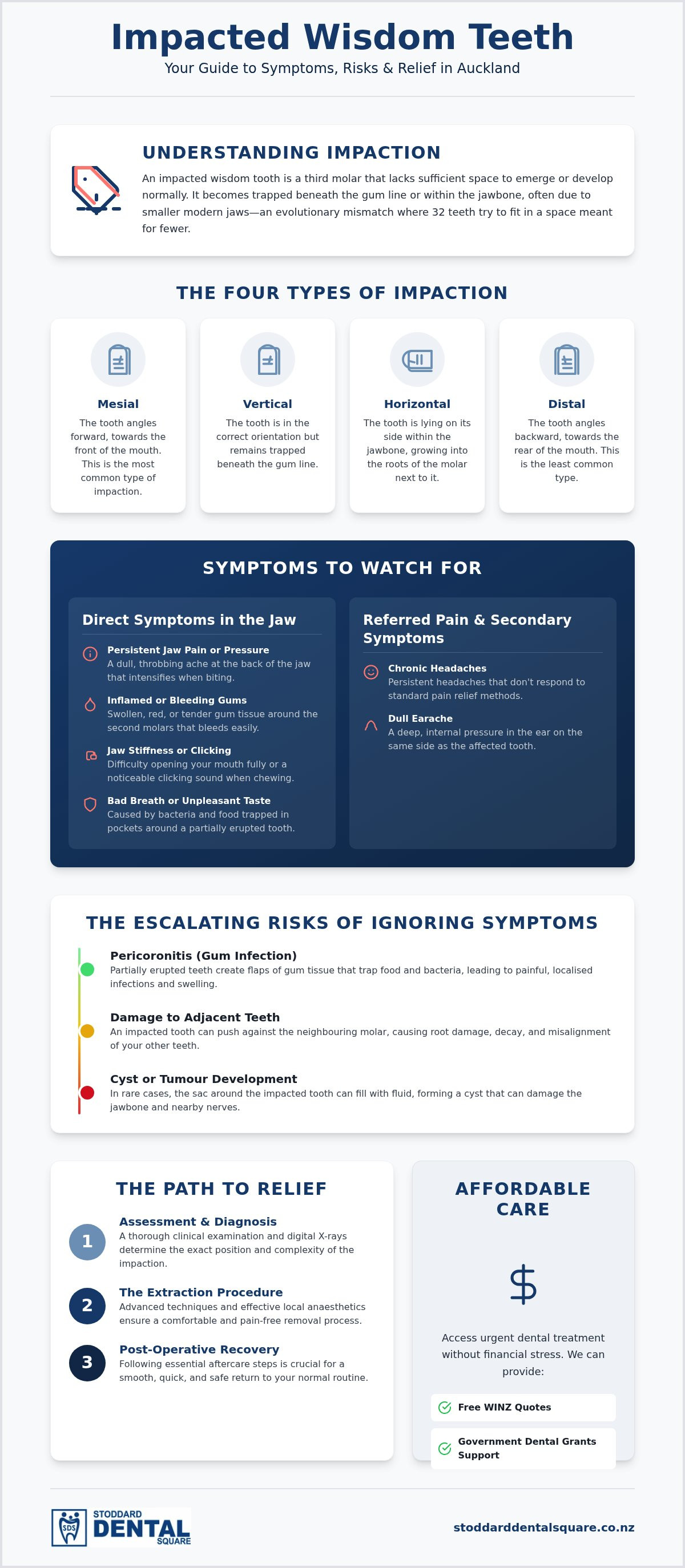
An impacted wisdom tooth is a third molar that lacks sufficient space to emerge or develop normally, becoming trapped beneath the gum line or within the jawbone.
Our jaws have gradually become smaller over thousands of years, yet most of us still carry the genetic blueprint for thirty-two teeth. This evolutionary mismatch is the primary reason why so many Aucklanders experience complications. If you begin to notice impacted wisdom tooth symptoms, such as a dull ache or a feeling of pressure at the back of your mouth, it's often a sign that the tooth is struggling against its neighbours. Left unaddressed, this lack of space can lead to a range of clinical issues that affect your broader oral health.
The Different Types of Tooth Impaction
Not every impaction looks the same, and the way a tooth is positioned determines the complexity of its removal. The most common variation is mesial impaction, where the tooth angles forward toward the front of the mouth. Other patients may experience vertical impaction, where the tooth is oriented correctly but remains stuck, or horizontal impaction, where the tooth lies flat on its side within the jawbone. Distal impactions, which angle toward the back of the throat, are the least common but often the most uncomfortable. We also distinguish between fully impacted teeth, which remain completely hidden under the bone, and partially impacted teeth, which have managed to poke through the gum slightly.
Long-Term Risks of Leaving Impacted Teeth
Choosing to ignore persistent impacted wisdom tooth symptoms can lead to complications that extend far beyond a simple toothache. Because partially erupted teeth are incredibly difficult to clean, they become hotspots for bacterial accumulation and infection, often leading to a painful condition called pericoronitis. Over time, an impacted molar can push against the neighbouring second molar, causing permanent root damage or misalignment of your otherwise straight teeth. In rarer cases, the sac surrounding the unborn tooth can fill with fluid, developing into a cyst or tumour that can hollow out the jawbone and damage nearby nerves. Taking proactive steps early is the best way to protect your smile and avoid these more complex surgical challenges.
Identifying the Signs: Impacted Wisdom Tooth Symptoms to Watch For
Recognising the early warning signs of a wisdom tooth struggle can save you from weeks of avoidable discomfort. While every patient's experience is unique, certain impacted wisdom tooth symptoms are universal indicators that your mouth is under stress. Often, the first sign is a persistent, throbbing pulse at the very back of the jaw. This isn't just a simple ache; it's a deep, rhythmic pressure that often intensifies when you're biting down or trying to focus on daily tasks. If you find yourself constantly rubbing your jawline or avoiding certain foods, your body is likely sending you a signal that space is running out.
Common signs that your third molars are struggling to emerge include:
-
Inflamed Gum Tissue: Swollen, red, or tender gums specifically around the area of the second molar.
-
Gingival Bleeding: Gums that bleed easily when you brush or floss the very back of your mouth.
-
Jaw Stiffness: Difficulty opening your mouth fully or a noticeable clicking sensation when you chew.
-
Halitosis and Unpleasant Tastes: A lingering bad taste or breath caused by food debris and bacteria trapped in the hard-to-reach pockets around a partially erupted tooth.
Referred Pain and Secondary Symptoms
The human body is an interconnected system, and dental issues rarely stay confined to the gums. Because the nerves in your jaw are so closely linked to the rest of your head, wisdom tooth pressure often manifests as referred pain. You might experience chronic headaches that don't respond to standard relief, or a dull earache that feels like a deep, internal pressure. For those with upper wisdom tooth issues, the roots can push against the sinus cavities, leading to persistent congestion or a heavy sensation in the cheeks and forehead. Swollen lymph nodes under the jawline are another common sign that your body is fighting local inflammation or a budding infection.
Asymptomatic Impaction: The Silent Threat
Perhaps the most deceptive aspect of these molars is that they don't always cause pain immediately. You might have a tooth that is completely horizontal, quietly pushing against your other teeth without a single flare-up. This "silent threat" is why we place such a high value on regular dental X-rays during your check-ups. Catching an impaction early allows us to plan a gentle, proactive solution rather than waiting for a painful emergency to arise. Understanding the wisdom tooth removal procedure and aftercare helps demystify the process, turning a potentially stressful surgery into a manageable step toward long-term health. If you are concerned about your jaw health, booking a comprehensive dental assessment is the best first step to ensuring your smile remains healthy and pain-free.
Assessing the Urgency: Monitoring vs. Emergency Extraction
Deciding whether to treat or monitor your third molars is a nuanced process that balances your current comfort against potential future risks. In some cases, if the teeth are emerging straight and you can keep the area clean, a "wait and see" approach is a perfectly valid clinical strategy. However, when impacted wisdom tooth symptoms begin to interfere with your quality of life, the situation shifts from routine monitoring to necessary intervention. Our team at Stoddard Dental Square prioritises your comfort by offering diagnostic clarity, ensuring you understand exactly why a specific course of action is recommended for your unique situation.
Modern digital X-rays play a vital role in this assessment. They allow us to map the precise location of the tooth roots and their proximity to the mandibular nerve, which is essential for creating a safe and predictable surgical plan. By understanding the underlying impacted wisdom tooth symptoms and causes, we can determine if the pressure you feel is a temporary growth spurt or a permanent blockage that will lead to crowding. Because we are open 7 days a week at our Mt Roskill clinic, we provide a vital lifeline for Aucklanders whose symptoms escalate unexpectedly over the weekend or after standard business hours.
Red Flags That Require Immediate Attention
While a dull ache is often manageable for a short period, certain symptoms indicate a dental emergency that cannot be ignored. If you develop a fever, notice significant facial swelling that extends to your cheek or neck, or experience a foul-smelling discharge near the back of your mouth, these are signs of a dental abscess. This type of infection requires urgent professional care to prevent it from spreading to other parts of the body. Severe pain that prevents sleep or makes it impossible to swallow also warrants an immediate appointment. Until you can reach our clinic, rinsing with warm salt water and using over-the-counter pain relief can help manage the acute discomfort temporarily.
The Importance of a Professional Consultation
A physical exam is the only way to truly determine the depth of impaction and the health of the surrounding gum tissue. During your consultation, we'll review your medical history and any medications you're taking to ensure your surgical plan is tailored to your specific health needs. We also understand that dental anxiety is a significant barrier for many people in our community. We'll take the time to discuss various sedation options to ensure you feel calm, safe, and relaxed throughout the procedure. This personalised approach helps transform what can be a daunting experience into a supportive, professional journey toward a pain-free smile.
The Removal Journey: Procedure and Post-Operative Care
Once we've confirmed that your impacted wisdom tooth symptoms require intervention, the next step is a carefully planned removal. Our primary goal is to ensure you feel entirely at ease throughout the process. We use a high-register local anaesthetic to ensure the treatment area is completely numb. This means you'll feel pressure but no sharp sensations during the appointment. For teeth that are tucked away beneath the gum or bone, surgical removal often involves gently dividing the tooth into smaller sections. This advanced technique allows for a more controlled extraction and typically leads to a faster, more comfortable healing period.
What to Expect During the Procedure
A simple extraction is used for teeth that have fully erupted, while surgical removal is necessary for those that are partially or fully impacted. Most appointments at our Mt Roskill clinic take between 45 and 60 minutes, though this varies based on the complexity of the impaction. We encourage you to bring a pair of headphones to listen to your favourite music or a podcast, which many of our patients find very relaxing. Having a friend or family member drive you home is always a good idea, as it allows you to rest immediately after the local anaesthetic begins to wear off.
Managing Recovery and Preventing Dry Socket
The most critical part of healing is protecting the blood clot that forms in the extraction site. If this clot is dislodged, it can lead to a painful condition known as dry socket, which exposes the underlying bone and nerves. To prevent this, you must avoid using straws, smoking, or any vigorous rinsing for the first few days. Focus on a soft food diet to keep the area undisturbed. Nutritious options like Greek yoghurt, smoothies, and mashed kumara are excellent choices that provide the energy your body needs to heal without requiring much chewing.
Your first 24 hours of recovery should follow this steady, methodical rhythm:
-
Bite firmly on the gauze: Keep the provided pad in place for at least 30 minutes to help the clot form.
-
Apply ice packs: Use a cold compress on the outside of your jaw in 20-minute intervals to minimise swelling.
-
Rest with elevation: Keep your head elevated on a few pillows to reduce blood flow to the jaw and limit throbbing.
-
Stay hydrated: Drink plenty of water but avoid hot beverages that could dissolve the forming clot.
-
Gentle hygiene: Avoid brushing the teeth directly next to the extraction site until the next day to prevent irritation.
If you notice bleeding that doesn't slow down with firm pressure, or if your pain suddenly intensifies after the third day, please reach out to our team. We are here to support your recovery every step of the way and ensure you return to your normal routine as quickly as possible.
Schedule your gentle wisdom tooth removal consultation
Affordable Wisdom Tooth Removal with WINZ Support in Auckland
Financial concerns often cause people to delay seeking help, even when impacted wisdom tooth symptoms are clearly present and causing significant distress. We believe that everyone in our Auckland community deserves access to high-quality dental care without the weight of financial stress. As a WINZ-approved dentist in Mt Roskill, we work closely with Work and Income to help eligible patients secure the funding they need for urgent surgical extractions. Addressing pain early is not just better for your health; it's often more cost-effective than waiting for a complex emergency to develop.
Work and Income New Zealand provides non-recoverable dental grants for urgent treatments, which can cover the costs of removing a tooth that is causing infection or severe pain. This support is a vital resource for many individuals and families across the city. While wisdom teeth are a primary focus for many of our younger patients, we also provide comprehensive care for a wide range of restorative needs. If you're interested in the broader landscape of dental pricing and support in New Zealand, you might find our Dental Crown Cost NZ guide helpful for understanding how WINZ assistance applies to different treatments.
Navigating Financial Support in Mt Roskill
The process of applying for a dental grant is designed to be as straightforward as possible to ensure you get relief quickly. First, you'll visit our clinic for a thorough assessment where we identify the specific impacted wisdom tooth symptoms you're experiencing. We then provide a free, no-obligation WINZ quote that clearly outlines the necessary treatment and the associated costs. You can take this quote to your local Work and Income office or simply upload it through the MyMSD portal for approval. Our team is highly experienced in this process and can guide you through the paperwork to make the experience as seamless as possible.
Why Aucklanders Choose Stoddard Dental Square
Our clinic is more than just a clinical centre; it's a warm, community-focused environment where your peace of mind is our priority. We understand that dental pain doesn't follow a standard Monday-to-Friday schedule. That's why we stay open 7 days a week, ensuring that busy professionals and families can access emergency care exactly when they need it. This commitment to accessibility is a core part of our mission as a "Compassionate Expert" in the Mt Roskill area. We value the trust our patients place in us and strive to maintain a modern, forward-thinking practice that feels like home. To stay connected with our team and receive local oral health updates, we invite you to follow our Facebook page. Whether you're dealing with a sudden ache or planning a scheduled extraction, we're here to provide the gentle, professional care you deserve.
Take Control of Your Dental Comfort
Recognising impacted wisdom tooth symptoms is the first step toward reclaiming your quality of life and protecting your smile. By identifying these warning signs early, you can choose a gentle, planned extraction rather than waiting for a painful emergency. Our team is dedicated to providing a supportive environment where your peace of mind is just as important as your clinical outcome.
At Stoddard Dental Square, we take pride in being a WINZ-approved provider in Mt Roskill, offering free quotes to ensure financial barriers don't stand in the way of your health. With our clinic open 7 days a week, expert care is always available on a schedule that works for you. We combine modern surgical precision with a warm, community-focused approach to ensure your journey to recovery is as smooth as possible.
Book Your Consultation and Get a Free WINZ Quote Today
We look forward to helping you return to a life free from dental pain and providing the compassionate care you deserve.
Frequently Asked Questions
How do I know if my wisdom tooth is impacted?
You'll likely notice persistent pressure, jaw stiffness, or red, swollen gums at the very back of your mouth. These impacted wisdom tooth symptoms often make it difficult to chew comfortably or open your mouth fully. A professional X-ray is the most reliable way to confirm the position of the tooth and determine if it's trapped beneath the gum line.
How much does wisdom tooth extraction cost in NZ?
The cost of an extraction depends entirely on whether the tooth is fully erupted or requires a more complex surgical approach. Simple extractions are generally less involved than surgical removals of impacted teeth. We provide a clear, detailed breakdown of all costs following your initial clinical assessment so you can plan your treatment with confidence.
Does WINZ cover the cost of wisdom tooth removal?
Yes, Work and Income can provide dental grants for urgent extractions if you meet their specific eligibility criteria. As a WINZ-approved provider in Mt Roskill, we offer free, no-obligation quotes that you can submit to help cover the cost of your treatment. This support is designed to ensure you get relief from pain without financial hardship.
Is wisdom tooth extraction painful?
You shouldn't feel any pain during the procedure because we use high-quality local anaesthetics to completely numb the treatment area. While you might feel some pressure as our team works, sharp sensations are effectively blocked. Any post-operative tenderness is a normal part of healing and can usually be managed with standard over-the-counter relief.
How long does the swelling last after wisdom tooth removal?
Facial swelling is a natural response to surgery and typically reaches its peak about two to three days after the procedure. Most patients notice a significant reduction in puffiness by the fourth or fifth day. Using ice packs in 20-minute intervals during the first 24 hours is an excellent way to keep the swelling manageable.
Can I drive home after having my wisdom teeth out?
If you've only had a local anaesthetic, you are technically able to drive, but we often recommend having a friend or family member pick you up. The surgical process can be tiring, and having someone else handle the Auckland traffic allows you to focus entirely on resting. Your safety and comfort are our primary concerns during the immediate recovery phase.
What can I eat after a wisdom tooth extraction?
Stick to soft, nutritious foods that require minimal chewing for at least the first few days. Excellent local options include mashed kumara, Greek yoghurt, lukewarm soups, and fruit smoothies. It's important to avoid crunchy, spicy, or seedy foods that could irritate the extraction site or dislodge the healing blood clot.
Is Stoddard Dental Square open on weekends for extractions?
Yes, our Mt Roskill clinic is open 7 days a week to provide essential flexibility for our community. This means you can book your procedure or seek help for urgent impacted wisdom tooth symptoms on a Saturday or Sunday. We understand that dental pain doesn't wait for Monday, so we make ourselves available when you need us most.